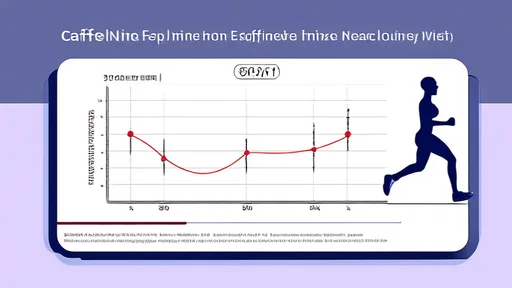
The relationship between caffeine intake timing and athletic performance is a topic that has captivated sports scientists, coaches, and athletes for decades. It is not merely a matter of consuming a stimulant; it is a nuanced dance of biochemistry, timing, and individual physiology. The curve that describes this relationship is not a simple upward slope but a complex graph with peaks, plateaus, and potential pitfalls. Understanding this curve is paramount for anyone looking to harness caffeine's ergogenic benefits effectively and safely, transforming it from a simple morning ritual into a precise performance tool.
To comprehend this curve, one must first appreciate the fundamental mechanism of caffeine's action. Upon consumption, caffeine is rapidly absorbed through the gastrointestinal tract, with peak plasma concentrations typically occurring between 30 and 120 minutes post-ingestion. Its primary mode of action in the body is as an antagonist of adenosine receptors. Adenosine is a neuromodulator that promotes relaxation, drowsiness, and vasodilation. By blocking these receptors, caffeine prevents adenosine from exerting its calming effects. This leads to increased neuronal firing in the brain, which the pituitary gland interprets as an emergency, triggering the release of adrenaline. This "fight or flight" hormone causes a cascade of physiological responses: your heart rate increases, blood pressure rises, blood flow to muscles is enhanced, and the liver releases glucose into the bloodstream. Psychologically, this translates to increased alertness, reduced perception of effort, and a diminished sensation of fatigue, allowing athletes to push harder and longer.
The initial phase of the performance curve begins with ingestion. For approximately the first 15 to 30 minutes, plasma caffeine levels are rising but have not yet reached a threshold to significantly impact performance. This is the latent period. The curve then begins its sharp ascent as plasma concentrations hit effective levels. This is where the renowned benefits manifest. Studies across endurance sports like cycling and running consistently show that caffeine can improve time-to-exhaustion and time-trial performance by 2-3%. In strength and power activities, the evidence is more varied but points to potential improvements in maximal output and muscular endurance. The peak of this curve, representing maximum ergogenic benefit, is generally accepted to occur roughly 60 minutes after ingestion for most individuals. This is the sweet spot, the window where the antagonism of adenosine receptors is most potent and the stimulatory effects are at their zenith.
However, the curve does not remain at this peak indefinitely. After reaching its apex, it begins a gradual decline, entering a sustained plateau of effectiveness. Caffeine has a half-life of approximately 3 to 5 hours in a healthy adult, meaning it takes that long for the body to eliminate half of the ingested dose. During this period, performance benefits persist but gradually wane as caffeine is metabolized by the liver and excreted. The duration of this plateau can be influenced by factors such as genetics, specifically the CYP1A2 enzyme activity, which dictates whether someone is a "fast" or "slow" metabolizer of caffeine. For a fast metabolizer, the decline from the peak may be steeper, while a slow metabolizer might experience a more prolonged, gentler plateau.
The timing of intake relative to exercise onset is the critical variable that dictates where on this curve an athlete begins their activity. The classic and most researched protocol is ingestion 60 minutes before exercise. This timing is strategically chosen to align the start of the activity with the rising phase of the curve, ensuring that the athlete hits the peak performance window right as the gun goes off or the race begins. This maximizes the potential for benefit during the crucial initial stages of competition. For prolonged events lasting several hours, such as a marathon or a long-distance cycling race, the strategy becomes more complex. Some athletes may opt to consume a smaller dose 30 minutes before and then supplement with additional caffeine (e.g., via gels or chews) during the event. This tactic aims to sustain plasma concentrations, effectively keeping the performance curve elevated and staving off fatigue later in the race.
But the curve has another side, a downward slope that represents the diminishing returns and potential negative consequences of mistiming or overconsumption. Consuming caffeine too late, for instance, right at the start of exercise, means the athlete will be well into their activity before plasma levels peak, potentially missing the boost when it is needed most. Conversely, consuming it too early, say 3 hours before an event, risks the athlete being on the downward slope of the curve—experiencing the crash or reduced efficacy—by the time the competition starts. The most significant risk on this side of the curve is overdose. Exceeding individual tolerance levels (typically suggested to be above 3-6 mg per kg of body weight) can lead to the curve plummeting into negative territory. Symptoms include severe anxiety, jitters, gastrointestinal distress, cardiac arrhythmia, and insomnia. These negative effects can utterly sabotage performance, causing a loss of focus, coordination, and overall capacity. Furthermore, for events held in the evening, even a moderately dosed morning coffee could potentially disrupt sleep quality due to caffeine's long half-life, impairing recovery and next-day performance—a crucial consideration often overlooked.
Individualization is the master key to navigating this complex curve successfully. The idealized 60-minute pre-exercise timing and the standard dose of 3-6 mg/kg are merely population averages. The reality is that each athlete's curve looks slightly different. Genetic factors play a massive role. As mentioned, a slow metabolizer might experience stronger effects and longer duration from the same dose that a fast metabolizer quickly processes and eliminates. Habitual intake is another colossal factor. A daily coffee drinker has developed a tolerance, meaning their adenosine receptors have adapted, and a pre-workout dose will produce a blunted response—their performance curve will have a lower peak compared to a caffeine-naïve individual. Body weight, sex, and even the type of exercise are other variables that can shift the curve left or right, higher or lower. Therefore, the golden rule is to experiment during training sessions, not on race day. An athlete must practice their caffeine strategy, adjusting the timing and dose to find their personal peak on the performance curve.
In conclusion, the interplay between caffeine intake timing and athletic performance is best visualized as a sophisticated, multi-dimensional curve rather than a simple linear relationship. It begins with a latent period, rises sharply to a peak of maximum benefit around 60 minutes post-consumption, and then gradually declines over several hours. The art and science of using caffeine as an ergogenic aid lie in strategically timing ingestion to align this peak with the demands of the competition. This requires a deep understanding of one's own physiology, metabolism, and tolerance. When executed with precision, caffeine can be a powerful tool to elevate performance, providing that crucial mental and physical edge. However, miscalculations in timing or dose can easily place an athlete on the undesirable downward slope of the curve, where side effects outweigh benefits. Ultimately, mastering this curve is a personal journey of experimentation and refinement, turning a commonplace compound into a finely tuned instrument of athletic achievement.

By /Aug 25, 2025

By /Aug 25, 2025
By /Aug 25, 2025
By /Aug 25, 2025

By /Aug 25, 2025

By /Aug 25, 2025
By /Aug 25, 2025

By /Aug 25, 2025

By /Aug 25, 2025
By /Aug 25, 2025
By /Aug 25, 2025
By /Aug 25, 2025

By /Aug 25, 2025
By /Aug 25, 2025
By /Aug 25, 2025

By /Aug 25, 2025

By /Aug 25, 2025

By /Aug 25, 2025

By /Aug 25, 2025

By /Aug 25, 2025
