As the morning mist clings to the mountain ridges and the first rays of sunlight filter through the pine trees, hikers across the world are preparing for their ascent. Among their essential gear, one item stands out for its dual nature of being both universally used and frequently misused: the trekking pole. These simple extensions of our arms have the power to transform a grueling climb into an enjoyable journey, yet their potential remains largely untapped by many outdoor enthusiasts.
The relationship between a hiker and their poles often begins with a simple purchase, perhaps influenced by a fellow trekker's recommendation or an outdoor retailer's display. Many assume that using trekking poles requires no particular skill—after all, how difficult could it be to walk with sticks? This misconception leads to countless hours of inefficient pole use on trails worldwide, with hikers unknowingly compromising their stability, endurance, and even safety.
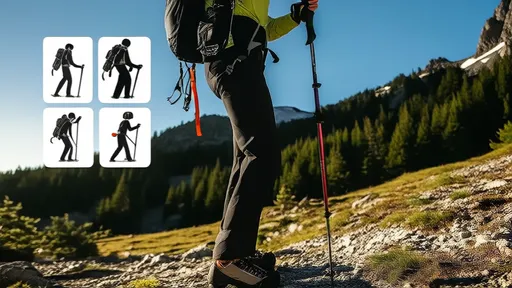
Proper pole adjustment forms the foundation of effective use. I recall watching an experienced mountaineer on the Pacific Crest Trail demonstrate what he called "the golden rule of pole length." With arms bent at a perfect ninety-degree angle, he explained that this position allows for optimal power transfer and natural arm movement. The common mistake of using poles that are too long forces the shoulders into an elevated, tense position, while excessively short poles cause the hiker to bend forward unnaturally, straining the back and reducing leverage.
On steep ascents, I've observed seasoned hikers shortening their poles slightly to maintain that crucial elbow angle while pushing upward. Conversely, during descents, they extend the poles to provide additional support and reduce impact on their knees. This dynamic adjustment represents one of the most valuable yet overlooked aspects of pole usage. The wrist straps, often dismissed as mere accessories, actually serve as critical components for efficient energy transfer. When properly utilized—sliding the hand upward through the strap from below and then gripping the handle—the strap bears much of the weight, reducing grip fatigue and allowing for a more relaxed hold.
The rhythm of pole planting separates masters from novices. During a group hike in the Rockies last fall, I noticed how the most experienced hikers moved with a natural, alternating pole rhythm that mirrored their walking gait, while beginners often dragged their poles or planted them haphazardly. The proper technique involves planting the pole opposite to the advancing foot, creating a stable triangular support system with each step. This synchronized movement not only improves balance but also engages the upper body muscles, distributing the workload more evenly across the body.
On technical terrain, I've witnessed expert hikers employing what they call "double poling"—planting both poles simultaneously for extra stability when navigating particularly challenging sections. This advanced technique requires precise timing and strength but provides unparalleled security when crossing streams, traversing scree slopes, or navigating icy patches. The coordination between pole planting and foot placement becomes almost dance-like in its precision among practiced hikers.
Perhaps the most dramatic difference between proper and improper pole use manifests during river crossings. Last summer in the Sierra Nevada, I watched two groups approach the same rushing stream. The first group gripped their poles nervously, stabbing at the water uncertainly. The second group adjusted their poles to maximum length, planted them firmly upstream, and created a stable three-point stance before each step. The contrast in confidence and stability was striking—the second group crossed with ease while the first struggled considerably.
Navigation through dense vegetation presents another scenario where technique matters immensely. I've learned from veteran hikers to keep poles closer to the body in thick brush, using quick, short plants to push branches aside rather than the sweeping motions many beginners employ. This approach conserves energy and maintains better control in challenging environments where visibility and mobility are compromised.
The maintenance of trekking poles represents another area where proper practice diverges from common errors. After each major hike, experienced outdoor enthusiasts thoroughly clean their poles, paying special attention to the locking mechanisms that so many neglect. I've seen carbon fiber poles damaged by grit trapped in the joints and aluminum poles weakened by corrosion that proper cleaning could have prevented. The regular inspection of tips and baskets becomes second nature to those who understand how equipment failure in remote areas can turn from inconvenience to emergency.
Storage practices vary widely among hikers, but the knowledgeable ones never store their poles fully compressed or extended. They maintain moderate tension in the locking mechanisms and occasionally apply specialized lubricants to the threads and locks. These small acts of care extend the life of the equipment significantly and ensure reliability when it matters most.
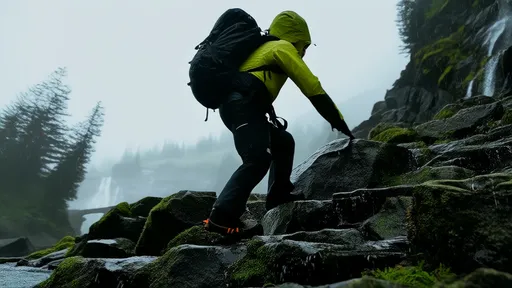
Adapting pole technique to different terrains reveals the true artistry of skilled hikers. While descending the loose gravel slopes of Mount Whitney, I marveled at how experts used their poles to create additional points of contact, effectively becoming four-legged creatures on unstable ground. They planted their poles slightly behind them, using them as anchors to control their descent speed and direction. Meanwhile, less experienced hikers often placed their poles directly in front, which provided minimal braking power and actually increased their risk of stumbling.
On snow-covered trails, I've observed winter hikers using their poles not just for balance but as probes to test snow stability before committing their weight. They've shown me how to rotate the wrist when planting the pole in hard snow, creating a more secure placement than the straightforward stab that many beginners use. The addition of larger snow baskets prevents poles from sinking too deeply, maintaining their effectiveness in winter conditions.
The psychological aspect of trekking pole use shouldn't be underestimated either. There's a certain confidence that comes from moving with two additional points of contact with the earth. I've noticed that hikers using poles properly tend to maintain better posture, looking forward at the trail ahead rather than constantly watching their feet. This improved field of vision enhances both safety and enjoyment, allowing hikers to appreciate their surroundings while moving more efficiently.
Perhaps the most compelling evidence for proper pole technique comes from those who have recovered from hiking injuries. I've spoken with numerous hikers who credited corrected pole use with enabling them to continue pursuing their passion despite knee issues or previous injuries. By properly redistributing weight and impact forces, trekking poles can extend one's hiking career significantly when used correctly.
As the hiking community continues to grow, the transmission of proper pole techniques becomes increasingly important. I've watched outdoor instructors spend hours working with students on what might seem like simple pole movements, breaking down each motion into its component parts. Their patience reflects an understanding that these skills, once mastered, become unconscious competencies that serve hikers across countless trails and conditions.
The journey toward mastering trekking poles never truly ends. Even after decades of hiking, I still learn new nuances of pole work from fellow enthusiasts—a different way to plant on switchbacks, an innovative approach to carrying poles when not in use, or a more efficient method for quick adjustments. This continuous learning process reflects the beautiful complexity hidden within what appears to be simple equipment.
As the sun sets behind the mountain range and hikers make their final descent to camp, the rhythmic tapping of properly planted poles echoes through the valleys—a sound that represents not just movement, but harmony between human and terrain, between technology and technique. This symphony of motion, developed through attention to detail and respect for proper form, transforms the simple act of walking into an elevated experience of connection and capability.

By /Aug 25, 2025

By /Aug 25, 2025

By /Aug 25, 2025

By /Aug 25, 2025

By /Aug 25, 2025

By /Aug 25, 2025

By /Aug 25, 2025

By /Aug 25, 2025
By /Aug 25, 2025

By /Aug 25, 2025

By /Aug 25, 2025

By /Aug 25, 2025

By /Aug 25, 2025
By /Aug 25, 2025
By /Aug 25, 2025

By /Aug 25, 2025

By /Aug 25, 2025

By /Aug 25, 2025

By /Aug 25, 2025

By /Aug 25, 2025
