In the bustling landscape of modern productivity, the quest for enhanced focus has led many to explore technological aids. Among these, noise-canceling headphones have surged in popularity, not merely as accessories for music enthusiasts but as tools for cultivating concentration. The correlation between the grade of noise cancellation and an individual's ability to maintain focus during tasks—particularly those requiring deep cognitive engagement—has become a subject of both scientific inquiry and practical interest. This intersection of acoustic engineering and cognitive performance reveals a nuanced relationship worth examining for anyone invested in optimizing their work or study environments.
Noise-canceling technology operates on a simple yet profound principle: to reduce or eliminate ambient sound through active or passive means. Passive noise cancellation relies on the physical design of the headphones to block out external noise, much like earplugs. Active noise cancellation (ANC), however, employs sophisticated electronics to generate sound waves that counteract incoming noise, effectively silencing the environment. The efficacy of this technology is often graded, with higher-end models offering more comprehensive sound suppression. These grades are not just marketing terms; they reflect the headphone's ability to handle various frequencies and intensities of noise, from the low hum of an airplane cabin to the erratic chatter of a coffee shop.
The human brain, while remarkably adaptable, is notoriously susceptible to auditory distractions. Studies in cognitive psychology have long established that unexpected or irrelevant sounds can fracture attention, increase cognitive load, and impede performance on tasks that require sustained mental effort. This is particularly true in open-plan offices, urban dwellings, or other settings where control over one's acoustic environment is limited. Here, noise-canceling headphones emerge not as a luxury, but as a pragmatic solution. By creating a bubble of auditory silence, they allow the brain to conserve its cognitive resources, redirecting them toward the task at hand rather than processing disruptive external stimuli.
But does the grade of noise cancellation directly influence the depth of focus one can achieve? Emerging research suggests that it does. Lower-grade ANC might suffice for drowning out consistent, low-frequency noises like the rumble of a train, but it may struggle with unpredictable, high-frequency sounds such as human conversation or keyboard clatter. These intermittent noises are especially pernicious because they can trigger the brain's orienting response—a primitive reflex that compels us to pay attention to potential threats or changes in our environment. Higher-grade noise cancellation, capable of mitigating a broader spectrum of sounds, provides a more stable and predictable auditory environment. This stability is crucial for entering and maintaining a state of flow, where concentration is intense, and productivity peaks.
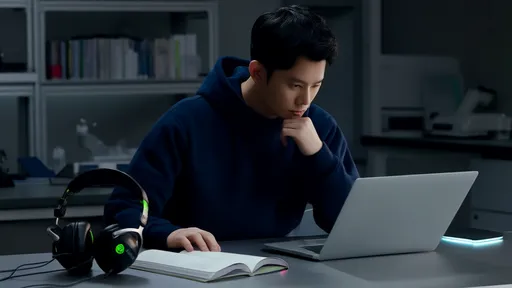
Training one's focus is akin to training a muscle; it requires consistent practice and an environment conducive to growth. Noise-canceling headphones, particularly those with advanced ANC, can serve as an effective training aid by minimizing external interruptions. This allows individuals to engage in deliberate practice, whether they are coding, writing, studying, or engaging in creative pursuits. Over time, as the brain becomes accustomed to fewer auditory distractions, users may find that their ability to concentrate improves even when not using the headphones. This phenomenon points to a potential long-term benefit: by using high-grade noise cancellation to create optimal conditions for focus, we might be conditioning our minds to be less distractible overall.
However, it is important to acknowledge that silence is not always the golden ticket to concentration. Some individuals thrive in ambient noise, and complete silence can feel unnerving or even counterproductive. This is where the quality of noise cancellation and the ability to customize it becomes vital. Many premium headphones offer adjustable ANC settings or transparency modes, allowing users to fine-tune their auditory environment. For instance, one might choose to cancel all noise while working on a complex problem but allow some environmental sound to filter through during less demanding tasks. This flexibility can support different phases of work and learning, making high-grade ANC a versatile tool rather than a one-size-fits-all solution.
Moreover, the psychological comfort provided by high-quality noise cancellation should not be underestimated. The knowledge that one can retreat into a personal zone of silence at will can reduce anxiety about potential disruptions. This sense of control is empowering and can itself enhance focus by alleviating the stress associated with unpredictable environments. In this way, the benefits of advanced noise cancellation are both physiological and psychological, addressing the symptoms and the sources of distraction.
In practical terms, selecting the right headphones for focus training involves considering the specific noise challenges of one's environment and the nature of the tasks performed. For those in consistently loud settings, investing in headphones with top-tier ANC might be justified. For others, a mid-range model could suffice. It is also worth considering factors like comfort, battery life, and sound quality for music or podcasts, as these can affect long-term usability. The goal is to find a tool that seamlessly integrates into one's routine, supporting rather than disrupting the workflow.
As we continue to navigate a world filled with auditory stimuli, the role of technology in shaping our cognitive experiences will only grow. Noise-canceling headphones represent a convergence of innovation and practical application, offering a tangible way to enhance focus and productivity. The grade of noise cancellation is more than a spec—it is a determinant of how effectively we can shield our minds from the chaos of the outside world. By choosing wisely and using these tools strategically, we can create the conditions necessary for deep work, ultimately training our brains to achieve greater levels of concentration and performance.
In conclusion, the alliance between advanced noise-canceling technology and focused training is both compelling and empirically supported. It underscores a broader principle: that controlling our environment is a critical step toward mastering our minds. Whether you are a student, a professional, or simply someone seeking to reclaim your attention, the right headphones might just be the key to unlocking a higher state of focus.

By /Aug 25, 2025

By /Aug 25, 2025

By /Aug 25, 2025
By /Aug 25, 2025

By /Aug 25, 2025
By /Aug 25, 2025

By /Aug 25, 2025

By /Aug 25, 2025

By /Aug 25, 2025
By /Aug 25, 2025

By /Aug 25, 2025

By /Aug 25, 2025

By /Aug 25, 2025

By /Aug 25, 2025

By /Aug 25, 2025

By /Aug 25, 2025

By /Aug 25, 2025

By /Aug 25, 2025

By /Aug 25, 2025

By /Aug 25, 2025
