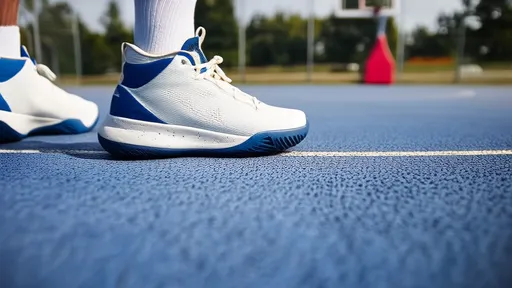
As the sun beats down on the asphalt, the familiar squeak of sneakers echoes across the court. For basketball enthusiasts, the choice of footwear is not merely a fashion statement but a critical decision that can influence performance, safety, and overall enjoyment of the game. While much attention is given to indoor court surfaces and their corresponding shoe requirements, the unique challenges of outdoor basketball demand a specialized approach, particularly when it comes to the interplay between ground material and shoe traction.
The most common surface for outdoor courts is asphalt. This rugged, durable material is the bedrock of park and playground basketball across the globe. Its coarse texture, composed of aggregate stones bound together, provides a naturally high level of friction. However, this very coarseness is a double-edged sword. It eats through soft rubber outsoles with alarming speed. A shoe designed for the pristine hardwood of an indoor arena will have its tread pattern smoothed into uselessness after just a few months of aggressive outdoor play. The constant, abrasive grinding against the rough asphalt acts like sandpaper, drastically shortening the lifespan of the footwear. Therefore, the primary consideration for an asphalt court is durability. Players should seek out shoes explicitly marketed as outdoor or with noted durability features. Look for thick, solid rubber compounds in the outsole, often made harder to resist wear. Deeper, more robust tread patterns are essential; they need to withstand the erosion and maintain their grip over time. While these harder rubbers might not offer the same sublime court feel as their softer indoor counterparts, they provide the necessary longevity and consistent traction against the unyielding asphalt.
Concrete courts represent another popular outdoor option, often found in dedicated park facilities or schoolyards. To the untrained eye, concrete and asphalt might seem similar, but their interaction with shoe rubber differs significantly. Concrete is generally smoother and less porous than asphalt. It lacks the inherent "give" of a wooden floor, making impact absorption a non-entity and placing greater stress on a player's joints. From a traction perspective, concrete can be surprisingly slippery, especially when a fine layer of dust or moisture is present. The need for a durable outsole remains paramount, but the tread pattern becomes even more critical. Herringbone patterns, a classic and effective design for multi-directional sports like basketball, excel on concrete. The sharp, biting edges of the herringbone grooves can dig into the microscopic imperfections of the concrete surface, providing reliable stopping power and pivot stability. A shoe with a shallow or worn pattern will struggle for grip on slick concrete, increasing the risk of slips and falls. The outsole compound should strike a balance—hard enough to resist wear but soft enough to deform slightly and create a larger contact patch for superior grip.
Modern outdoor facilities sometimes utilize modular plastic or polyurethane surfaces. These tiles or poured surfaces are designed to be more forgiving on the legs than asphalt or concrete, often offering better shock absorption and sometimes even mimicking the give of an indoor floor. Their surfaces can vary widely, from textured to relatively smooth. Traction on these surfaces is less about brute durability and more about precision. The smoother surface requires a well-designed pattern that can channel dust and debris away to prevent clogging. Dust is the enemy of traction on any outdoor court, but it is particularly problematic on smooth plastic surfaces where it can create a slippery film. Shoes with deep, multi-directional flex grooves and complex channeling systems perform well here. The rubber compound can afford to be slightly softer than what is used for asphalt, allowing for better bite and a more responsive feel underfoot without sacrificing too much in terms of durability.
Beyond the macro-level surface type, micro-level conditions play a huge role in shoe selection. Is the court perpetually dusty or covered in a fine layer of sand? Is it under trees, constantly littered with pollen and organic debris? Is it in a humid climate where morning dew or sudden rain showers leave a persistent dampness? These environmental factors drastically alter the traction equation. A dusty court nullifies even the best tread pattern, as the sole slides on a layer of fine particles instead of contacting the court itself. In these conditions, a wiping routine becomes as essential a part of the game as dribbling. Players must constantly wipe the bottoms of their shoes with their hands to clear the dust. Shoes with very wide, deep grooves are better at self-cleaning, shedding debris with each step. For damp courts, a tightly spaced herringbone or a similar multi-directional pattern can help disperse water and maintain some purchase, though truly wet outdoor courts are always a significant hazard.
The anatomy of the shoe's outsole is the direct interface with the court, and its design is paramount. The tread pattern is the first thing to scrutinize. Deep, multi-directional patterns like herringbone or hexagonal designs are the gold standard for outdoor play. They provide excellent grip for cuts, stops, and drives from any angle. Shallow patterns or those designed primarily for linear movement (common in running-shoe-inspired basketball models) are a poor choice for the stop-start, lateral-heavy nature of basketball. The rubber compound is equally important. Softer compounds (often measured on a durometer scale) provide incredible grip and court feel but will wear down alarmingly fast on abrasive outdoor surfaces. Harder compounds are far more durable but can feel slippery, especially on dust-covered or smooth concrete. Manufacturers dedicated to outdoor performance often use a harder base compound with softer rubber inserts in high-wear areas to try and achieve the best of both worlds.
While much focus is rightly placed on the bottom of the shoe, the upper material and overall construction cannot be ignored. Outdoor play is brutal. The constant friction from defensive slides, hard cuts, and general wear and tear can cause cheap synthetics or knitted uppers to tear and fail long before the sole is worn out. Reinforced uppers made of durable synthetic leather, thick mesh, or canvas are far more suitable for the rigors of the blacktop. Double-stitching, overlays in high-abrasion areas (like the toe drag area), and robust lacing systems all contribute to a shoe's ability to survive a full season of outdoor punishment. Ankle support, always a personal preference in basketball, might be given extra consideration outdoors where court conditions can be unpredictable and the risk of landing on an uneven surface or another player's foot is ever-present.
Ultimately, conquering the outdoor court is about matching your tool to the task. There is no single perfect shoe for every outdoor surface, but understanding the battlefield is the first step to making an informed choice. Prioritize durable, hard-wearing materials and deep, aggressive tread patterns. Acknowledge the specific challenges of your local court—its surface material, its level of dust, its exposure to the elements. The right shoe won't make you jump higher, but it will provide the stable, reliable foundation upon which your skills can safely and effectively be displayed, game after game, season after season. It is the unsung hero of the pickup game, the difference between a fearless crossover and a cautious hesitation, between a secure defensive stance and an embarrassing slip. Choose wisely, and the court is yours.
By /Aug 25, 2025
By /Aug 25, 2025

By /Aug 25, 2025

By /Aug 25, 2025
By /Aug 25, 2025
By /Aug 25, 2025
By /Aug 25, 2025

By /Aug 25, 2025
By /Aug 25, 2025

By /Aug 25, 2025
By /Aug 25, 2025
By /Aug 25, 2025
By /Aug 25, 2025
By /Aug 25, 2025
By /Aug 25, 2025
By /Aug 25, 2025

By /Aug 25, 2025
By /Aug 25, 2025

By /Aug 25, 2025

By /Aug 25, 2025
