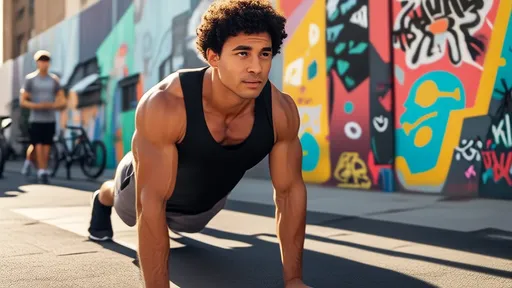
On a crisp autumn morning in the industrial district, the vibrant murals of a once-derelict warehouse wall bear witness to an unexpected urban ritual. As the first rays of sunlight catch the spray-painted constellations overhead, fitness enthusiasts begin arriving with resistance bands, kettlebells, and yoga mats. This is where functional fitness meets public art—a spontaneous training ground that has become the city's latest wellness phenomenon.
The convergence of street art and exercise didn't happen by design. Local personal trainer Marcus Thorne recalls how it began: "I was running with a client last spring when we stopped to admire the new mural. The space felt energizing—we did some bodyweight exercises right there. Next session, others joined. Within weeks, it became our regular spot." What started as impromptu workouts has evolved into scheduled group sessions, with trainers incorporating the artwork's themes into their routines. Participants now balance on curbs beneath geometric panthers and perform push-ups facing psychedelic portraits.
The location's appeal lies in its organic nature. Unlike sterile gym environments, this open-air studio provides uneven surfaces, stairs, and ledges that challenge stability and engage neglected muscle groups. "Functional training prepares you for real-world movements," explains sports physiologist Dr. Elena Rodriguez. "Training in dynamic environments with visual stimulation enhances proprioception and cognitive engagement. The brain must process changing stimuli while maintaining form—that's invaluable functional carryover."
Artists have taken notice of how their work frames these kinetic performances. Muralist Juniper Lee, whose thirty-foot hummingbird provides backdrop for morning yoga sessions, observes: "Seeing people move with intention before my art creates living composition. Their flows echo the painting's rhythm—it's collaboration between static and moving art." This synergy has inspired artists to consider movement sightlines and negative space when planning new pieces, subtly designing for human interaction.
Social dynamics flourish in this unconventional setting. Regulars range from corporate professionals to college students and retired athletes, all united by their appreciation for both art and fitness. There are no membership fees or dress codes—only shared water coolers and spontaneous spotting partnerships. "The community self-regulates," says weekly participant Sarah Chen. "We respect the art, clean up after ourselves, and make space for everyone. It feels like reclaiming public space for wellness."
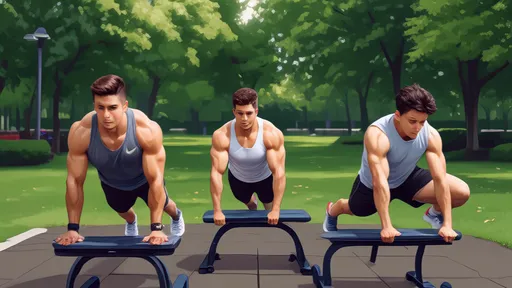
City officials initially monitored the gatherings cautiously, but have since embraced the movement. Parks and Recreation director Michael O'Donnell notes: "This organic activation of underutilized space aligns perfectly with our healthy city initiatives. We're now working with artists and trainers to identify additional suitable locations." The health department has even installed bike rack-style equipment stations nearby, providing anchors for resistance training while preserving the area's improvisational spirit.
As the movement grows, photographers and videographers have begun documenting the striking visual juxtapositions—bodies in motion against frozen art, daylight tracking across murals as exercises progress, the steam of breath rising toward painted skies. These images have spawned social media communities where functional fitness enthusiasts worldwide seek out urban art backdrops for their workouts, creating global ripple effects.
The phenomenon raises interesting questions about how we design cities for holistic health. Urban planner Ishanvi Patel muses: "We typically segregate spaces—art here, exercise there. This shows how multidisciplinary spaces can serve deeper human needs. Perhaps future city planning should consider how walls might double as training aids, or how park sculptures could incorporate pull-up bars."
As evening falls, the last group finishes their circuit training beneath neon-bright aerosol galaxies. The artwork seems changed by the day's activity—not physically altered, but somehow activated by the energy of those who moved before it. This is where functional fitness transcends physical conditioning, becoming cultural practice that connects bodies, art, and urban environment in singular harmony. The painted walls stand ready for tomorrow's movements, waiting to frame new patterns of human potential against their vibrant stories.
By /Aug 25, 2025
By /Aug 25, 2025

By /Aug 25, 2025
By /Aug 25, 2025
By /Aug 25, 2025
By /Aug 25, 2025
By /Aug 25, 2025
By /Aug 25, 2025
By /Aug 25, 2025
By /Aug 25, 2025

By /Aug 25, 2025
By /Aug 25, 2025
By /Aug 25, 2025
By /Aug 25, 2025
By /Aug 25, 2025
By /Aug 25, 2025

By /Aug 25, 2025
By /Aug 25, 2025

By /Aug 25, 2025

By /Aug 25, 2025
